
Pharming
Can't spell Soil without Oil

It took me moving to the midwest of the lower 48 in North America to see the disrepair of modern agriculture. I’m dead center of the contiguous U.S.A. in an area that is rich with cattle ranches, as we are in the foot hills of the Ozarks. Venturing east just a short distance towards the Mississippi River or north towards the Columbia River where the land is more flat, you start to see massive combines and machinery reminiscent of the first Avatar movie. My ignorance to what is needed for modern large farms to run is only outweighed by the utter inefficiency by which modern food is grown.
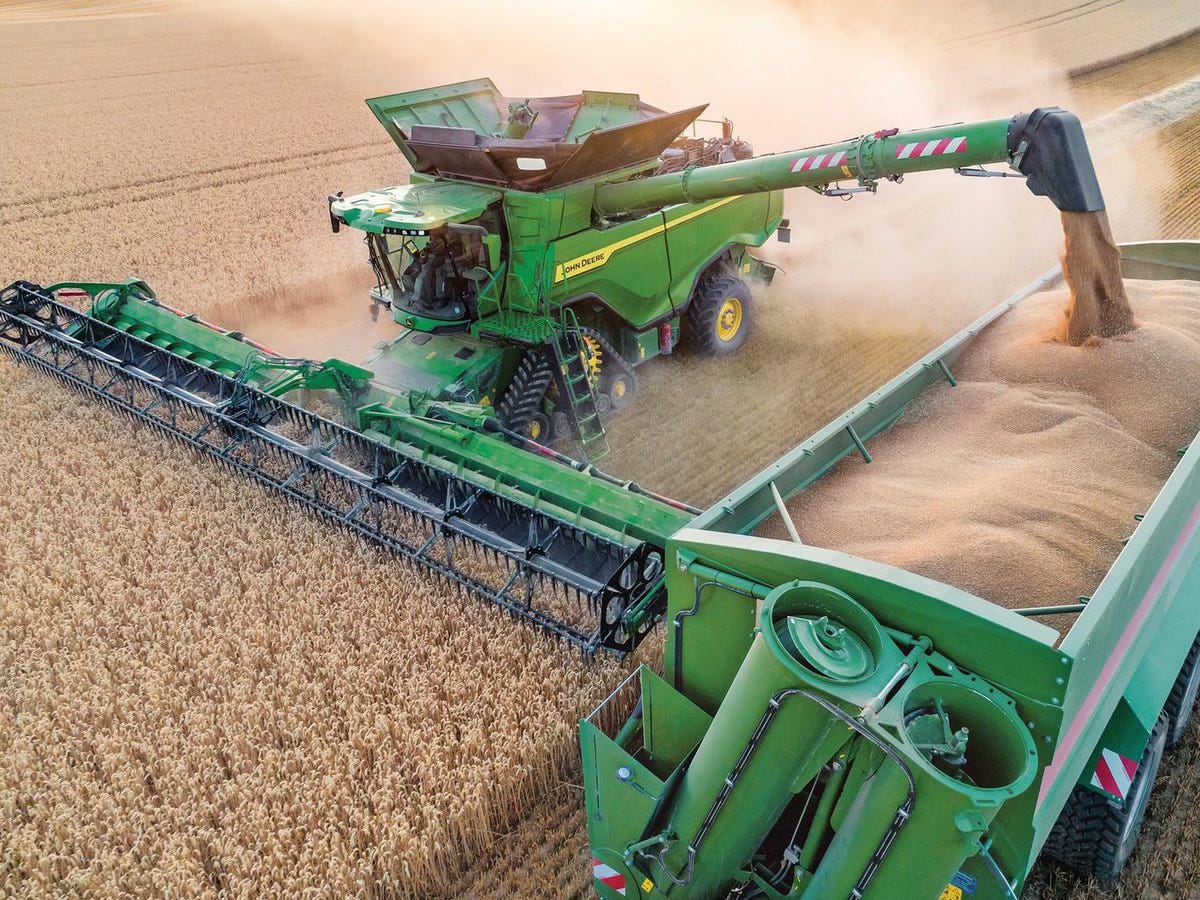
I understand the industrialization of food, as I got to witness many a family farm in Costa Rica get turned into chemical waste lands because the progeny of the patriarchal farmer would venture towards educational centers and eventually the Townz. As an ecologically savvy invasive species, Gringo, my recommendations to my Costa Rican Tico neighbors fell upon deaf ears because I was being an insensitive idealist. These farms were established with anywhere from five to twenty sets of hands, and now there might be two or three sets given the same amount of land. My arguments not to use weed killer are stupid to someone who doesn’t have the time, man power, or energy to PULL the weeds.
The first world and the third world both have a similar predicament, even though the scales are vastly different. Post WWII North America had a baby boom and plenty of urban sprawl to slowly extract the majority from the heartland towards the coasts. CAFTAs and NAFTAs finished off the diaspora, while schooling had the fish swim towards technology and service-sector jobs. Currently, agrarian populations in Central America are funneled into customer service hives for Big Data in their transition to modernity. Many a proud parent would tell me how their kids were graduating from collegio and now get to work for Google or Amazon. [The Jefferson’s theme song would be emanating from the their BioFields.]
Having the youth focussing on bullshit jobs is only half the energy problem in the food equation.

Jack Johnson’s anthem of recycle, reuse, and repurpose was precognized by the war chemical industry of the mid 40’s as they rebranded their surplus as fertilizer. “Let’s not have any of these good chemicals go to waste.” The era of hydro-carbons(Oil) based soil amendments was off and running and why not. The industry was available to make these products of convenience and farm equipment could scale to replace the missing man hours that were city bound. There’s always been a problem with big machines on wheels though. They are extremely expensive to fix.
When I lived in Southern India I was educated on the John Deere led “Greening of India” plan. I found that ironic, as the region I was in was anything but green. In the mid 1960’s, John Deere brought their equipment over to India to revolutionize the subsistence farming model that had worked forever. Affordable loans to large landowners allowed them to industrialize these farms that would normally employ hundreds of people. The man power was plentiful in India, but the allure of modernization with a naivety to maintenance schedules left the landscape peppered with Green and Yellow combines, and tractors that couldn’t be fixed in an efficient manor. My hosts blamed much of their deplorable economics to this failed greening decade. Many of the subsistence farmers that were fired from these Nuevo Technical farms starved because they were paid, in part, with food.
India echoes in my mind as I see regular diesel costs soar above $6 per gallon. How long will Pharmers be able to run their equipment, let alone pay for the hydro carbons that are being injected into the soil? Apparently being a Pharmer now is only feasible if you standard practice, like doctors do, your land for commodity crops. By standard practice I mean the use of petrochemicals (oil) in every phase of the commodity crop. I can see the bottle neck here in the states as I have witnessed the India precedence first hand. The second it gets too expensive to buy the petrochemicals and fix the machines, the Phood goes Bye Bye.
Speaking of India, let’s address the pink elephant in the room. Why does soil need oil?

That question needs to be rephrased: Why do our current soils need so much oil? Put simply, oil is liquid carbon, hence the name hydro-carbon. When your soils have been depleted of their carbon stores, there needs to be a surrogate carbon to act in its stead. What makes these synthetic, hydrocarbon-rich chemicals the red-headed step child of agriculture is the fact that they end up sterilizing the soil, making it unstable. I’ve heard the same thing happens with our biology with synthetic hormone therapy. For example, friends of mine that did testosterone replacement therapy ended up with lower T than when they started. The net biological debt has been increased because the hormones don’t ever go back to what’s natural.
Our soil has a net carbon debt because of a flawed standard of caretaking that is wholly supported by the same War machine, I mean chemical companies, that post record profits year in and year out. What’s interesting about the chemical bottleneck previously spoken about is the actual geographic bottleneck in the Strait of Hormuz.
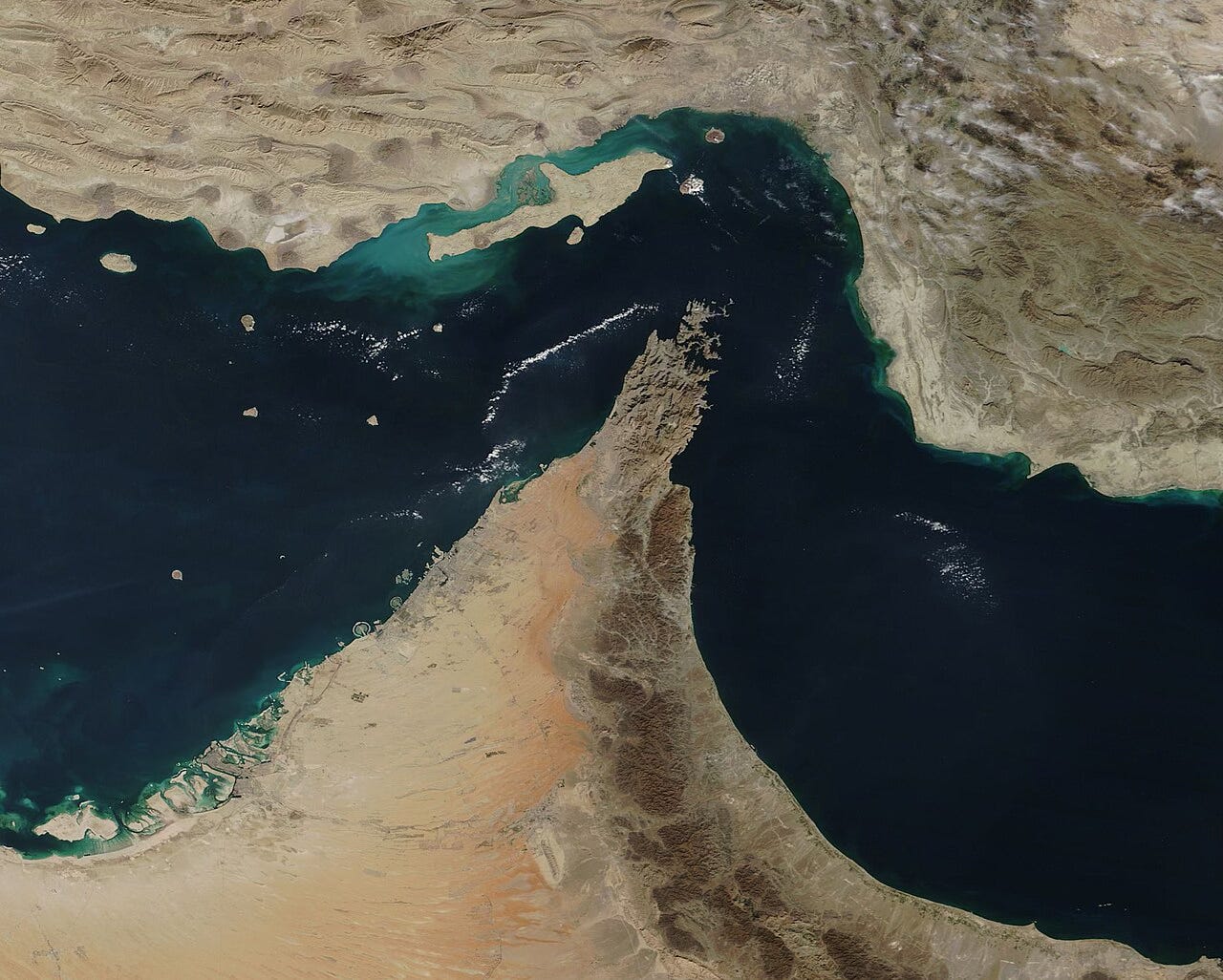
The war with Iran has highlighted the weak link in the Just In Time (JIT) global distribution network. Many of the hydro-carbon manufacturing facilities that are in the Middle East have their products go through the narrow passage above. What that means is that standard fertilizers just got more expensive. Many refineries have been destroyed which has reduced the supply, which increases the cost. Iranian tariffs might cost a little bit considering the infrastructure damage caused by U.S. and Israeli bombing. These frisky Persians are adamant that The West will be responsible for reparations caused by this latest Neo-Con incursion. What this means for the Standard American Diet (SAD) at the very least is a significant price hike if not an all out shortage.
What’s reassuring to me is that none of this is necessary if we remove the oil from the soil. Everything that grows in nature is mainly carbon. We can restore fixed carbon to our land with a little bit of intelligent cooking. If we summon our inner alchemist and pyrolyze just a little bit of our local Bio-Mass and put it into soil amendments, problem solved. In fact, I see this time as a perfect opportunity to let go of the standard of caretaking. We can produce food efficiently in a healthy manor with the conversion of local Bio-Mass into BioChar. We literally have a limitless renewable resources HERE. There’s no need to go through the pinch.
To give you a living example, my current gardening plot at my house had about 4” of topsoil when we started close to 4 years ago. In that same location I now have 2’ of dark top soil after implementing composting with BioChar with my seasonal garden. I have used zero hydrocarbons to accomplish this other than the vinyl my hose is made of. Where I lived in Central America, my little fruit grove was pretty sad with the bauxite clay that dominated my hectare. After a few years of top dressing with biochar that was made on my farm, my finca grew more fruit than I could eat. I bought books on fermenting fruit to make alcohol-based fuels, as my Carbo-Hydrates were so abundant! Let’s pivot and keep our carbon local so the just-in-time system is irrelevant. BioMass to BioChar creates fuel instead of using it. As we use our resources intelligently, our surplus will become evident.
Excellent!
beautifully written!